Algorithmic Personalization: Incentives in Virtual Reel and Competitive Platform Ecosystems
Written by Amir Griffin · Aug 2, 2026
Algorithmic Personalization: Incentives in Virtual Reel and Competitive Platform Ecosystems
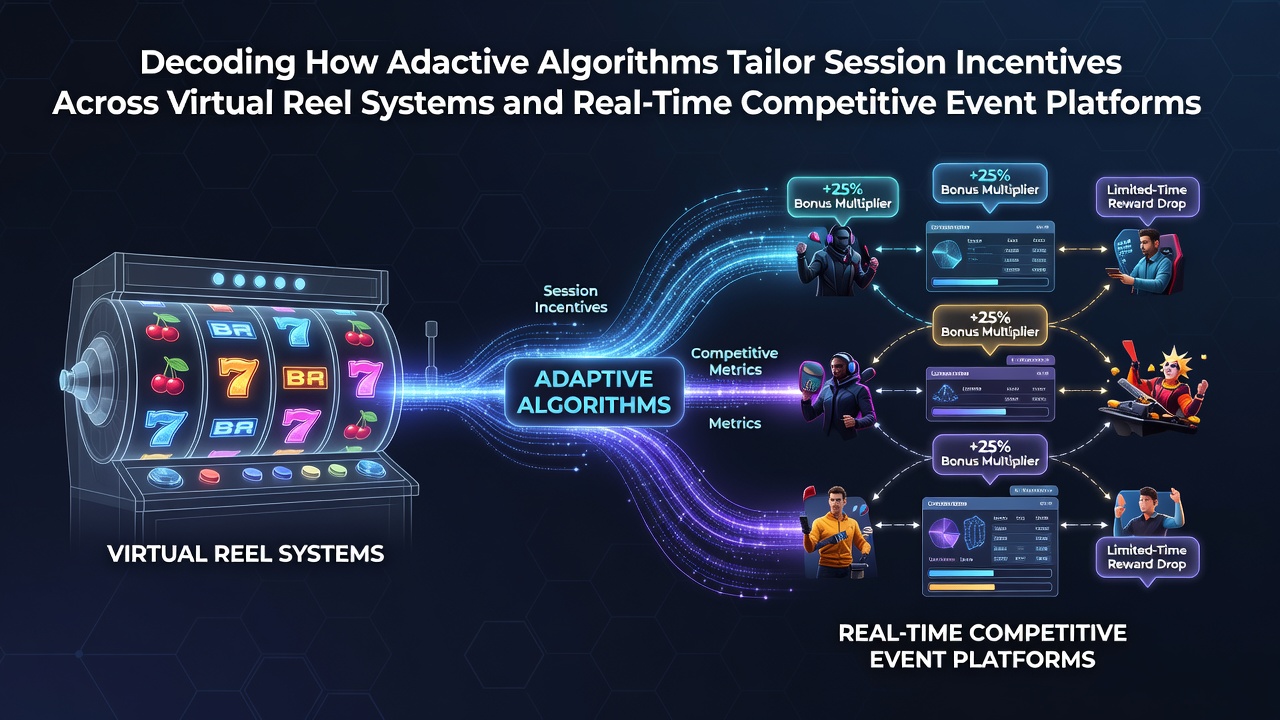
Virtual reel systems rely on adaptive algorithms that analyze player behavior in real time, and these systems adjust session incentives such as bonus rounds, free spins, and loyalty multipliers to match individual engagement patterns, while real-time competitive event platforms apply similar logic to tournament entry rewards, live betting adjustments, and prize escalators. Data from platform logs shows that machine learning models process variables including session duration, wager frequency, and win/loss ratios, then generate tailored offers that aim to maintain activity levels across both slot interfaces and live competition feeds. Researchers at academic institutions have documented how reinforcement learning frameworks update incentive parameters after each interaction cycle, which allows the software to shift from generic promotions to targeted nudges without manual intervention from operators.
Core Mechanisms Behind Virtual Reel Personalization
Virtual reel platforms collect telemetry on spin velocity, bet sizing sequences, and feature activation rates, then feed this information into clustering algorithms that segment users into dynamic cohorts, and once a cohort receives a profile the system deploys incentive sets calibrated to that group's historical response curves. Studies published in proceedings from the Association for Computing Machinery indicate that these models often incorporate multi-armed bandit techniques, which balance exploration of new reward structures against exploitation of proven incentive types. In August 2026 several major platform providers reported upgrades to their backend pipelines that reduced latency between data ingestion and incentive delivery to under 200 milliseconds, enabling near-instantaneous adjustments during active sessions.
Take one operator that integrated graph neural networks to map relationships between consecutive reel stops and subsequent player retention signals, and the implementation produced measurable lifts in average session length according to internal telemetry shared at industry conferences. Observers note that such networks treat each reel outcome not as an isolated event but as a node within a larger sequence graph, allowing the algorithm to predict when a player is likely to disengage and preempt that moment with a calibrated free-spin bundle or cashback tier.
Real-Time Competitive Event Platforms and Incentive Adaptation
Competitive event platforms extend the same algorithmic principles to live tournaments and head-to-head formats, where participant skill ratings, entry timing, and historical payout acceptance rates influence the size and timing of overlay bonuses or satellite ticket offers. These platforms ingest streaming data from multiple concurrent matches, apply predictive models to forecast drop-off points, and then surface individualized incentives that appear inside the event lobby or through push notifications. Figures released by the International Gaming Institute reveal that platforms employing continuous learning loops achieved higher repeat participation rates compared with static reward schedules, although the precise uplift varies by game vertical and regional player demographics.
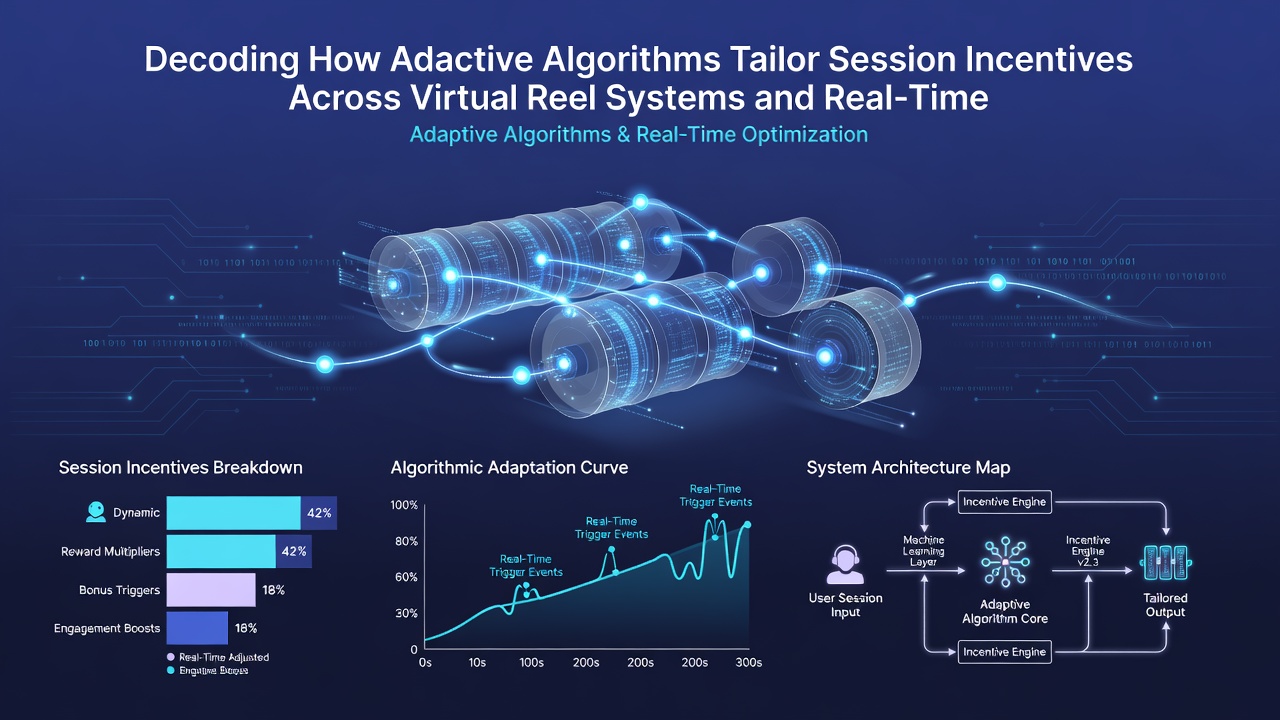
One documented case involved a platform that layered contextual bandit algorithms over its esports betting interface, and the system learned to escalate prize multipliers for users who had previously abandoned mid-tournament when facing unfavorable odds, which resulted in extended engagement windows. The models also account for external factors such as time-of-day patterns and concurrent event overlap, adjusting incentive values accordingly to smooth traffic across peak and off-peak hours.
Data Inputs and Model Training Practices
Training datasets for these algorithms typically combine anonymized transaction records with behavioral telemetry, and platforms apply differential privacy techniques to limit re-identification risks before feeding records into gradient-boosted decision trees or deep reinforcement learning agents. Reports from the Nevada Gaming Control Board highlight that operators must maintain audit trails documenting how each incentive decision traces back to specific model outputs, which supports regulatory review of fairness and transparency. What's interesting is that feature engineering pipelines often include engineered variables such as "momentum scores" derived from recent win streaks or loss sequences, and these derived metrics frequently rank among the highest-importance predictors in model explainability reports.
Cross-platform deployments add another layer, because algorithms trained on reel data sometimes transfer knowledge to competitive event modules through transfer learning methods, although domain adaptation steps remain necessary to handle differences in event pacing and outcome granularity. Industry associations have begun publishing guidelines on minimum standards for model validation, including hold-out testing across geographic player segments to guard against regional bias in incentive allocation.
Integration Challenges and Technical Constraints
Latency budgets, regulatory data-retention rules, and the need for real-time fallback mechanisms create engineering trade-offs that operators must navigate when scaling adaptive systems. A single high-traffic reel lobby can generate millions of events per minute, which requires distributed computing architectures capable of updating model weights without service interruption. Observers note that containerized microservices now handle isolated slices of the incentive pipeline, allowing independent scaling of the prediction layer versus the delivery layer.
Security considerations also influence design choices, because incentive engines represent high-value targets for manipulation attempts, and platforms therefore implement cryptographic signing of model outputs together with anomaly detection on incoming data streams. Those who've studied deployment logs report that adversarial input detection has become a standard component of production environments.
Conclusion
Adaptive algorithms continue to evolve across virtual reel and competitive event environments, driven by advances in real-time analytics and regulatory expectations around transparency. As of August 2026 the technical foundations rest on reinforcement learning, graph-based modeling, and continuous validation pipelines that together determine how incentives are calibrated to individual sessions. Further progress will likely hinge on improvements in explainability tooling and cross-jurisdictional data standards that allow operators to maintain compliance while refining personalization accuracy.